
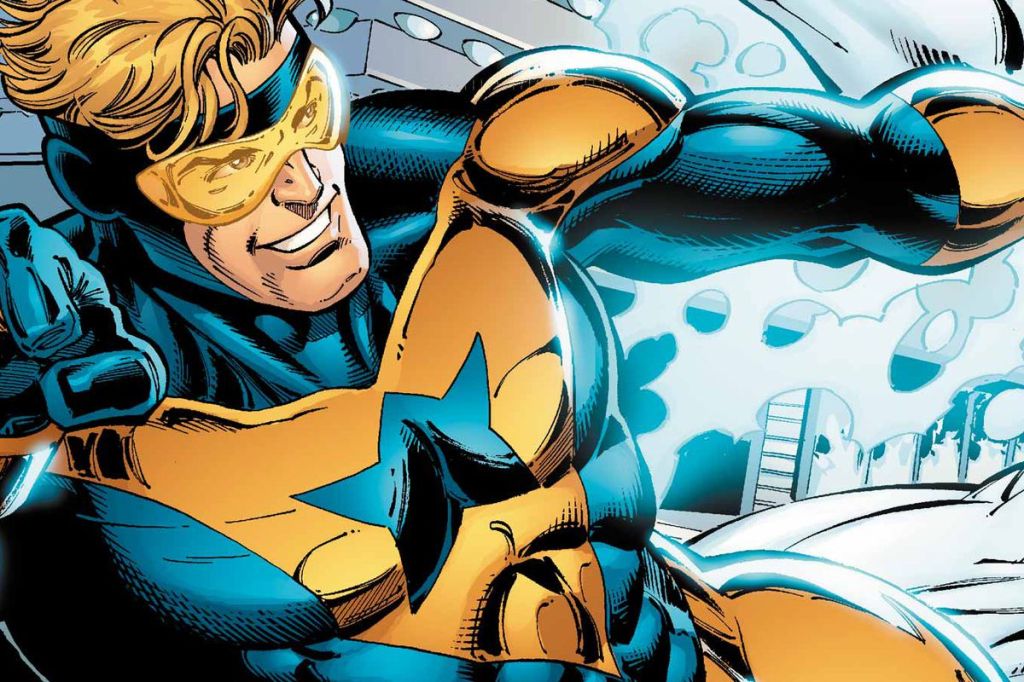
In a universe filled with serious, god-like heroes, there’s a shimmering figure who stands out—less for his flawless heroism and more for his relentless pursuit of fame and endorsements. He is Booster Gold, the self-proclaimed “Corporate Crusader” and one of the most unique, and ultimately, beloved characters in the DC pantheon.
The Genesis: A Star is Born (in the Future)
Booster Gold made his debut in 1986’s Booster Gold #1, right in the aftermath of the universe-altering event Crisis on Infinite Earths. He holds the distinction of being one of the first significant new characters introduced into the post-Crisis DC continuity.

The character was created by writer and artist Dan Jurgens, who conceived of a hero who was a product of the emerging 1980s celebrity culture. Instead of being driven by tragedy or a moral imperative, Booster Gold’s motivation was decidedly modern: fame and fortune.
The Disgraced Quarterback from the 25th Century
Booster Gold’s real name is Michael Jon Carter, and his story doesn’t begin in the 20th century—it begins in 25th-century Gotham City.
- The Scandal: Michael was a gifted quarterback for Gotham University, nicknamed “Booster.” Desperate for money for his ailing mother, he fell in with a bookie and started throwing games for gambling purposes. He was caught, disgraced, and expelled from the university.
- The Opportunity: With his life in ruins, he took a job as a night watchman at the Metropolis Space Museum. Surrounded by relics of the “Golden Age of Heroes,” Michael saw an opportunity. He realized that a person with knowledge of the future and advanced technology could easily become a celebrated superhero in the past and profit handsomely.
- The Heist: He stole several pieces of powerful technology, including a Legion of Super-Heroes flight ring, Brainiac 5’s force field belt, and a high-tech power suit. Crucially, he also took a time sphere and a knowledgeable security robot named Skeets (who holds an extensive historical database).
- The Name: Arriving in the 20th century, he originally wanted to be called “Goldstar,” but after saving President Ronald Reagan, he flubbed the two names—”Booster” and “Goldstar”—leading Reagan to introduce him as Booster Gold. The name stuck, much to his later chagrin when people inevitably mishear it as “Buster.”
The Justice League International Era
Booster’s greatest early claim to fame was his membership in the revamped, more comedic version of the Justice League in the late 1980s, primarily under the creative team of Keith Giffen and J. M. DeMatteis.
It was here that he formed one of the most iconic friendships in DC Comics with Ted Kord, the second Blue Beetle. The duo, affectionately known as the “Blue and Gold,” became legendary for their comical schemes, ill-fated business ventures (like the superhero repo company), and status as the comic relief of the team.

Though often played for laughs, this period was crucial in showcasing a deeper side to Booster. While his surface motives were selfish, he consistently rose to the occasion, proving that beneath the gold-plated narcissism was a genuine hero at heart.
The Protector of the Timestream
Following a period of diminished presence, Booster Gold was relaunched in the mid-2000s, where his character found a new, more profound purpose.
- Saving Ted Kord: The murder of Blue Beetle (Ted Kord) was a devastating blow to Booster and ultimately became a key part of his later motivations.
- 52 and Rip Hunter: During the year-long weekly series 52, Booster was instrumental in saving the DC Multiverse and was revealed to be working with the legendary Time Master, Rip Hunter. It was here that he began his secret life as a time-cop, protecting the timestream from paradoxes while maintaining his public image as a self-centered, slightly incompetent superhero—a perfect, self-made cover. It was later revealed that Rip Hunter is actually Booster Gold’s son.
- A True Hero in Secret: In his modern storylines, Booster Gold’s true heroic nature is shown when he sacrifices his own reputation to ensure history remains intact. His public image as a joke is, ironically, the greatest heroic act he commits, as it ensures his enemies—and even some allies—don’t realize the crucial, world-saving role he plays behind the scenes.
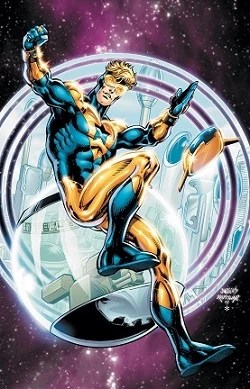
From disgraced athlete to corporate crusader to secret guardian of all time, the history of Booster Gold is a journey of redemption. He is a flawed, highly commercialized hero whose quest for validation has evolved into a true desire to do good, even if he has to let the world believe he’s just a “loser from the future.”


 Podcaster Without Fear
Leave a comment